More than 60 percent of people avoid following the news occasionally or frequently. This trend can be explained not only by news fatigue but also by a decline in trust in journalism, political and economic pressures, and increasing dependence on digital platforms.
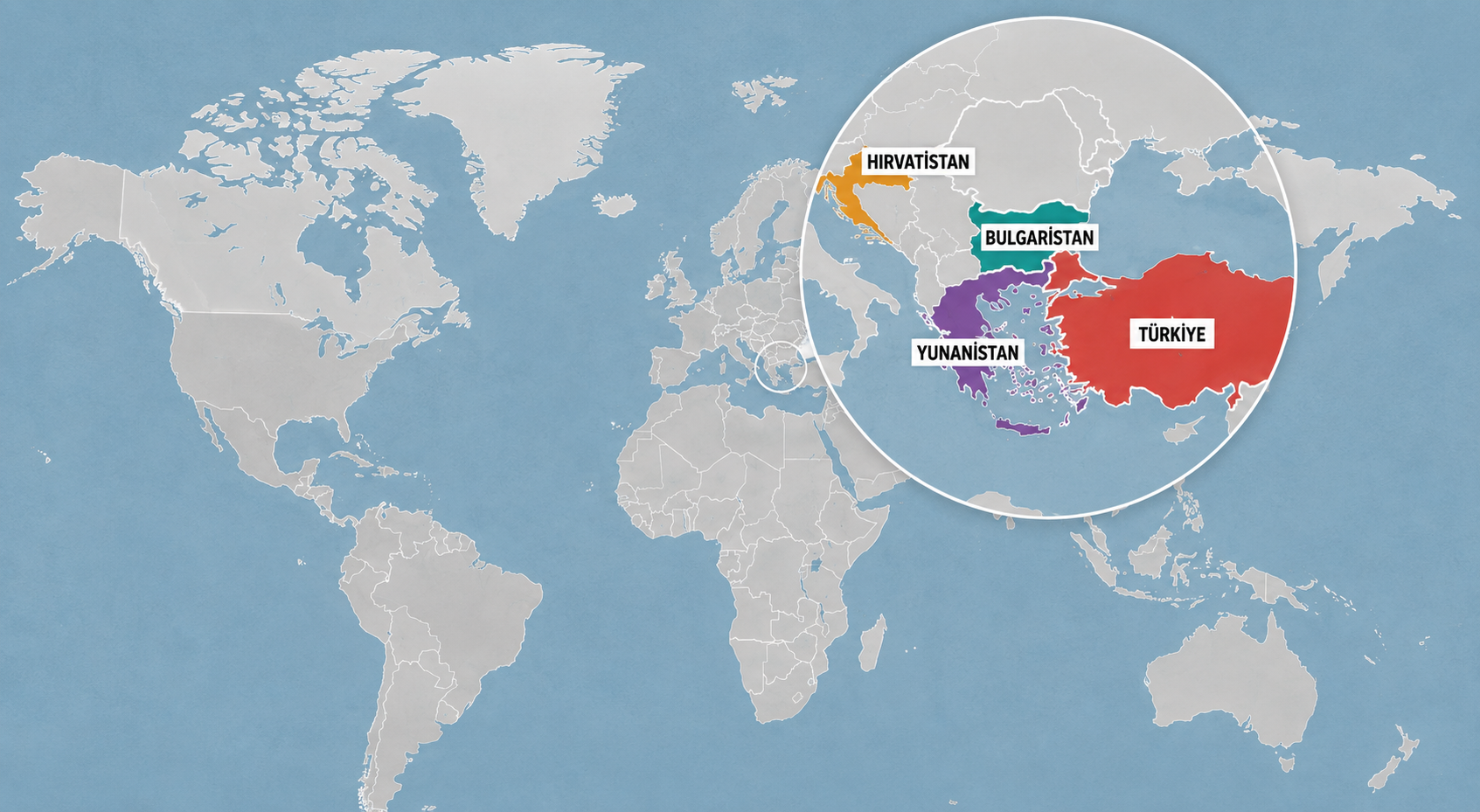
What do you think Greece, Bulgaria, Croatia, and Turkey have in common? Aside from obvious answers related to history or geographic location…
Let’s give the answer right away: In all four of these countries, the percentage of people who avoid the news is well above the global average—ranging from 60 to 63 percent.
According to the Reuters Institute 2026 Digital News Report, which covers 48 countries, the percentage of people who avoid following the news occasionally or frequently has reached 42 percent worldwide. In 2017, this figure was 29 percent.
The picture in Turkey is even more striking: Six out of every 10 people avoid the news occasionally or frequently. The rate is the same in Bulgaria and Greece. In Croatia, however, it is higher at 63 percent. The other three countries, aside from Turkey, are EU members. Turkey is the country where pressure on the media is most widespread and severe. Economic indicators are also more pessimistic for Turkey. So how is it that the rates of news avoidance are so similar? Why don’t people want to read, watch, or follow the news?
The first answer that comes to mind is that people are exhausted and fed up due to wars, crises, economic problems, and a never-ending stream of negative news. However, according to experts, the issue is bigger than that. Readers and viewers are not only turning away from the news; trust in journalism is also steadily eroding.
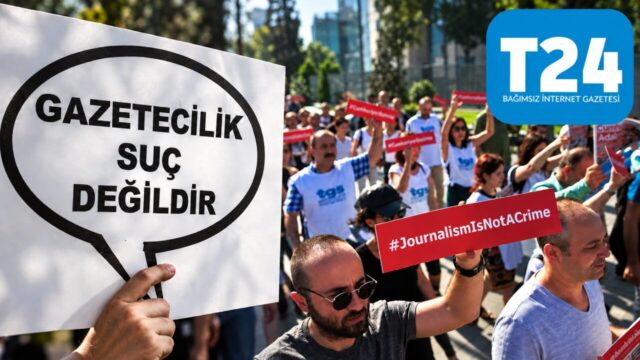
Turkey, Greece, Bulgaria, and Croatia face distinct yet striking challenges regarding press freedom. In Reporters Without Borders’ (RSF) 2026 World Press Freedom Index, Croatia ranks 64th, Greece 86th, Bulgaria 87th, and Turkey 163rd. In Croatia, lawsuits and legal pressure targeting journalists, and in Bulgaria, political and economic interference, are putting a strain on independent media. In Turkey, however, the situation is entirely different. Pressures on media ownership and journalists’ freedom paint a much bleaker picture.
Our interviews with experts from Croatia, Greece, and Turkey point to a vicious cycle: As people turn away from the news, the economic conditions for journalism become more difficult; as political and economic pressures increase, the quality and reliability of the news become questionable. This, in turn, pushes people even further away from the news.
THE CRISIS OF TRUST IN JOURNALISM
Among the reasons for avoiding the news, news fatigue, distrust, and a sense of powerlessness stand out. Maja Sever, President of the Croatian Journalists’ Union (SNH) and the European Federation of Journalists (EFJ), attributes the 63 percent rate in Croatia to a combination of these three feelings. She notes that years of political conflict, war, corruption, and economic crises have turned the news cycle into a source of stress.
In Turkey, Associate Professor Can Ertuna points out that citizens’ observation that their will to participate in politics has been rendered ineffective reinforces the feeling of “What difference will it make if I watch?”
Nikos Panagiotou, a professor of communication at Aristotle University of Thessaloniki, interprets this situation not as a rejection of journalism, but as the result of a broader crisis of trust among citizens, the media, and political institutions. According to him, doubts about the media’s independence from political and economic power centers play a significant role in this crisis of trust:
“The lines between journalism and political propaganda, commercial advertising, and party communications are often blurred. Media organizations are perceived not as independent watchdogs, but as part of the same power dynamics.”
Can Ertuna, who highlights the media ownership structure in Turkey, argues that media organizations with resources and production capacity are under the direct or indirect control of the government.
Similar issues are observed in Croatia and Greece. In Croatia, the public broadcaster HRT’s continuation of a pro-government editorial line has been the subject of heavy criticism. A key factor in the erosion of trust in HRT is the fact that its management and editorial staff are appointed through political interventions. Maja Sever says viewers are aware of these interventions. In addition to political dependence, the shrinking of economic resources, the growing precariousness of journalists’ jobs, and the reduction in the time and resources needed for quality journalism are also affecting the quality of news coverage.
According to Sever, a sustainable solution for financing quality journalism has yet to be found. As newsrooms compete for clicks just to stay afloat, conflict, drama, and sensationalism are financially rewarded more heavily.
NEWS IS INCREASING, ORIGINAL REPORTING IS DECLINING
Economic pressure affects not only journalists’ working conditions but also the quality of the resulting news. According to Nikos Panagiotou, original journalism in Greece has increasingly been replaced by “copy-and-paste” content. A news story published in one medium is quickly replicated on other platforms without verification, and social media content is also presented as news. From a Turkish perspective, this is a very familiar scene.
Panagiotou believes that the gap between the news agenda and people’s daily lives is also widening. In his view, people are withdrawing not because they do not care about social issues, but because the news relies on repetition, conflict, and emotional exhaustion. When they cannot see their own lives, problems, and communities reflected in the news, they become alienated from the media.
NEW DESTINATION: PLATFORMS
To understand this avoidance of the news, we must also look at where and how people access it. According to a Reuters report, social media and video-sharing platforms like YouTube have, for the first time, surpassed television and news websites to become the most common sources for accessing news. The report describes this shift as the “platformization of news consumption.”
However, moving away from institutional news outlets does not always mean moving away from information. In Greece, users are turning to short videos, private messaging groups, news content creators known as “newsfluencers,” and algorithm-driven recommendations.
In Turkey, too, platforms like YouTube are one of the key ways independent journalism can exist outside of mainstream media. The Reuters report points out that approximately 90 percent of the national media is under government control, noting that users are turning to independent news organizations and individual journalists. However, this time another form of dependence is emerging: algorithms.
According to Can Ertuna, while social media platforms create space for independent journalism, they also make journalists dependent on their own rules and algorithms. Whether a news story reaches a wide audience is increasingly determined by the platforms’ visibility preferences.
This gives rise to a new paradox: As journalism becomes independent from mainstream media, it becomes dependent on digital platforms. A high-quality news story may fail to reach a wide audience if it is held back by the visibility limits set by algorithms.
A JOURNALIST’S REPUTATION AND THE VALUE OF THE NEWS
In addition to the platforms, pressures targeting journalism are also affecting the relationship of trust established with the news. Although the forms may vary, the targeting of journalists, legal pressures, and various interventions in Croatia, Greece, and Turkey stand out as a common problem.
According to Maja Sever, the targeting of journalists as “liars,” “enemies,” “provocateurs,” or “partisans” because of the stories they report undermines not only the journalists’ reputation but also the trust in the news itself.
In Croatia, lawsuits and legal pressure against journalists have a particularly deterrent effect on local and independent media. Even if the lawsuits are not resolved, they consume journalists’ time and resources.
In Greece, meanwhile, legal pressures stand out alongside physical and digital attacks. Nikos Panagiotou cites the revelation that journalist Thanasis Koukakis was monitored using Predator spyware during the process known as the “Greek Watergate” as one of the most striking examples. According to him, the surveillance of journalists also threatens source confidentiality, a fundamental element of investigative journalism.
Returning to the main point, the sole reason people avoid the news is not simply that they are tired of hearing bad news. We are facing a much more complex issue. What matters is rebuilding trust that journalism is accurate, fair, independent, and serves the public interest.
According to Maja Sever, reporting less bad news and more good news is not the solution. Forest fires do not end just because they are not reported, nor does climate change become less dangerous simply because we stop reading about it. The role of journalism is not to shield people from reality, but to help them understand reality, place events in their proper context, and make informed decisions. Therefore, the problem is not the existence of difficult news stories. The real problem is that people have lost faith in the fact that these stories are produced fairly, independently, and in the public interest.