Following the increase in access restrictions on the social media accounts of journalists and media organisations in Turkey, the IFJ, EFJ and TGS issued a joint call to X’s management. The three journalism organisations called on X not to block access to journalists’ and media organisations’ accounts without an independent and verifiable court ruling. Journalists whose accounts have been blocked explained: “It is not just our followers who have been lost, but also our news sources and the archives we have built up over many years.”
The rise in decisions to block access to the social media accounts of news websites, as well as those of journalists, media organisations, professional bodies and civil society organisations in Turkey, has prompted international journalism organisations to take action.
The International Federation of Journalists (IFJ), the European Federation of Journalists (EFJ) and the Turkish Journalists’ Union (TGS) issued a joint appeal to the owner and management of X, calling for the accounts of journalists and media organisations in Turkey not to be blocked without an independent and transparent court ruling.
In the joint statement, X was called upon to examine the legal basis of requests originating from Turkey, to reject general and disproportionate requests, to inform users affected by access restrictions, and to disclose requests from Turkey and the responses given to them in transparency reports. The statement also called for measures to be limited to specific content in cases where such action is claimed to be legally necessary, rather than rendering accounts entirely invisible.
DECISIONS ON 1,270 ACCOUNTS IN SEPTEMBER
According to data from the Freedom of Expression Association, decisions to block access to at least 1,270 X accounts were issued in September 2026. The association stated that 90 per cent of these had been made invisible by X in Turkey.
The association’s EngelliWeb account, which monitors access blocks, also encountered the same practice on 1 October.
According to data cited in a joint statement by the IFJ, EFJ and TGS, only 115 of the 1,270 accounts subject to access blocking orders were backed by a court ruling. The statement noted that the grounds for closing the remaining 1,155 accounts were unknown and that the total number of followers across these accounts exceeded 35 million.
On 30 September, an access ban was imposed on T24’s website as well as its X account, which had approximately 1.9 million followers. Recently, access ban decisions have also been issued against Kısa Dalga, Sol Haber and Evrensel.
Access restrictions have been imposed on the accounts of numerous journalists, including İrfan Değirmenci, Can Bursalı, Fırat Fıstık, Ersin Eroğlu, Meral Danyıldız, Canan Kaya, Ali Tarakçı, Onur Dalar, Dinçer Gökçe and Esra Tokat.
A joint statement, which also cited data reported by Reuters, noted that as of 30 September, access had been blocked to a further 147 X accounts in the latest wave, with these accounts having a total of approximately 2.65 million followers. It was also stated that in the previous wave, approximately 150 accounts – including those of journalists and media organisations – had been blocked.
So what is actually lost when a journalist’s account is made invisible from Turkey?
The experiences of journalists Meral Danyıldız, Yıldız Tar and Hikmet Adal demonstrate that an access ban affects not only the ability to post on social media, but also the journalist’s readership, their communication with news sources and the digital archive they have built up over the years.
DANYILDIZ LOST ONE FOURTH OF HER FOLLOWERS
Journalist Meral Danyıldız’s account was blocked on 28 September. Danyıldız says her account was made invisible from within Turkey without any prior notification.
Explaining that whilst she could log into her account and post content, these posts were not visible to others, Danyıldız subsequently opened a new account.
Having had approximately 43,000 followers on her old account, Danyıldız has so far managed to reconnect with around 11,000 people on her new account.
“All I did was publicise this and ask my friends to share it. Thanks to that, I’ve at least managed to reach 11,000 people again. So, once again, it’s down to solidarity,” she says.
THE NEWS AND PHOTOS ARE THERE, BUT READERS CAN’T SEE THEM
For Danyıldız, the loss is not merely the difference of around 32,000 followers.
She can still access the news, photos and videos she shared on her account over the years, but users in Turkey cannot see them.
Danyıldız explains the situation, saying, “None of the posts I made in the past are visible. Consequently, that account no longer serves any purpose.”
Noting that it is still too early to assess the outcome from the perspective of news sources, Danyıldız believes that the account being made invisible could also have serious implications for the relationships he has built with those sources.
Danyıldız also says that, despite sending numerous emails to X, he has not received a response regarding the reason for the closure of his account.
TAR “A MEMORY, AN ARCHIVE HAS VANISHED”
The access ban on journalist Yıldız Tar’s X account came whilst she was detained at Sincan Prison.
After her release, rather than opening a new account, Tar began using the account that had been set up whilst she was in prison as a gesture of solidarity with her. However, this account was subsequently blocked as well.
Tar now prefers to disseminate her news and articles through various platforms.
A significant part of the loss she has experienced stems from the news archive she built up over the years.
Tar explains that the vast majority of the more than 100 pieces of content published on T24—which have been subject to the access ban—consist of her own “Human Landscapes” interviews and articles. Noting that these pieces were subsequently removed from publication as well, Tar says he can no longer access his own work.
Tar’s account highlights how access restrictions can affect not only the circulation of a journalist’s current posts but also access to their past work: “I can’t access any of them at the moment, for example. In other words, a memory, an archive, has vanished.”
Tar also mentions that there are news sources reaching out to him via X. He says that lawyers have initiated legal proceedings to have his account reinstated and the access restriction lifted.
Nevertheless, he emphasises that the access restriction has not halted his journalism. Tar states that when one platform closes down, he will continue to deliver his news to readers via other channels.
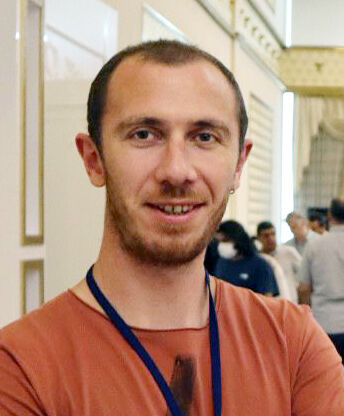
DECISION ISSUED AGAINST ADAL, ACCOUNT STILL ACTIVE
The situation faced by journalist Hikmet Adal is different.
Adal learnt on 1 September that a decision had been issued to block access to his account. However, the decision has not yet been enforced by X, and his account remains accessible from Turkey.
Adal, who changed his username after learning of the ruling, believes this may have played a part in the ruling not yet being enforced.
Adal points out that the fact his account remains technically accessible does not overturn the ruling against him: “After all, there is a court ruling against me, and even though the account is still technically accessible, I am officially subject to censorship.”
Adal has not opened a new account nor switched to another platform. He states that he will take legal action should X enforce the ruling.
“YOU MUST FIRST FIND OUT FOR YOURSELF IF A RULING HAS BEEN ISSUED AGAINST YOU”
Another aspect of the process Adal has been through is that the ruling was not served upon him.
Adal, who states that he does not know which court issued the ruling or on what grounds, says that X merely notified him via email.
To obtain a copy of the court ruling, he must reply to the email sent by X and request the ruling. Adal will only be able to initiate the appeal process once he has obtained the ruling.
“You are forced to find out about a ruling made against you yourself first.”
As Adal’s account is currently active, his past news articles and archive remain accessible. However, if the ruling is enforced, the news articles he has shared over the years and the archive he has built up will become inaccessible directly from within Turkey.
Adal also points out that, from a journalist’s perspective, X is not merely a tool for sharing news. He notes that the platform also serves to follow current affairs, access different sources and ensure that news sources can reach the journalist.
“For a journalist, the issue is not merely losing a social media account. There is a risk that the news tracking, communication with sources and the bonds formed with readers over the years will be severed.” The experiences of Danyıldız, Tar and Adal illustrate the varying consequences of access restrictions on journalists. What they have in common is that, from a journalist’s perspective, a social media account is not merely about the number of followers. The account also serves as a news archive built up over the years, a network of sources and a direct channel of communication with readers.
CALL FROM THE IFJ, EFJ AND TGS TO X
Following the increase in access restrictions on journalists’ X accounts, the IFJ, EFJ and TGS issued a joint appeal to the platform’s management. The three journalism organisations called for X to meticulously examine the legal basis for requests to restrict access. The statement called for journalists’ and media organisations’ accounts not to be blocked without an independent and verifiable court ruling.
The full text of the joint appeal reads as follows:
“Access blocking decisions, used as one of the tools to interfere with freedom of expression and press freedom in Turkey, are becoming increasingly widespread. Recently, it is not only news websites but also the social media accounts of journalists, media organisations, professional bodies and civil society organisations that have been blocked from access within Turkey.
In response to these access blocks, the International Federation of Journalists (IFJ), the European Federation of Journalists (EFJ) and the Turkish Journalists’ Union (TGS) are making an open appeal to the owner and management of X:
X must not block access to the accounts of journalists and media organisations in Turkey without a court order or another clear and verifiable decision by an independent judicial authority. Moreover, given that doubts about the impartiality of the Turkish judiciary are at an all-time high, access restrictions imposed on the basis of such decisions are arbitrary.
Recent events demonstrate that the issue is not limited to a few isolated accounts. On 30 September 2026, access was blocked not only to T24’s website but also to its X account. The ruling by the Istanbul 1st Criminal Court of Peace also covers T24’s X account, which has approximately 1.9 million followers. Decisions concerning the newspapers Kısa Dalga, Sol Haber and Evrensel are also in the public domain.
During the same period, it was reported that the X accounts of numerous journalists – including İrfan Değirmenci, Can Bursalı, Fırat Fıstık, Ersin Eroğlu, Meral Danyıldız, Canan Kaya, Ali Tarakçı, Onur Dalar, Dinçer Gökçe and Esra Tokat – were also blocked from access in Turkey.
In addition, in September 2026, access restriction orders were issued against hundreds of X accounts belonging to journalists, news organisations, economists, academics, legal professionals and other users.
According to Reuters, as of 30 September, access to a further 147 X accounts had been blocked in the latest wave alone; these accounts had a combined total of approximately 2.65 million followers. In the previous wave, it was reported that around 150 accounts, including those of journalists and media organisations, had been blocked.
According to data from the Freedom of Expression Association, of the 1,270 accounts subject to blocking orders in September, court rulings exist for only 115. The grounds for the closure of the remaining 1,155 accounts are unknown. The total number of followers across these accounts exceeds 35 million.
The scope of these measures in Turkey directly affects and restricts not only press freedom but also the right of millions of people to access news and information.
Moreover, although X’s management policy provides for certain safeguards regarding freedom of thought and expression, we observe that it complies with and cooperates on requests for access restrictions that lack judicial oversight. In its official policy, X states that valid legal documents, such as court orders, may be used in requests to block access to content or accounts; it specifies that authorities holding a court order or other legal document must attach this to their applications. X also explains that, provided there is no legal impediment, affected users will be notified of the request.
Our call to X’s management is therefore clear:
- In requests for access restrictions originating from Turkey, scrutinise carefully whether an independent and transparent court order exists.
- Do not accept unilateral requests from administrative authorities, law enforcement agencies or other public bodies as sufficient grounds for closing the accounts of journalists and media organisations without independent judicial oversight.
- Examine the legal basis and scope of any request to block access to an account or content; reject requests that are general, vague or disproportionate.
- If the imposition of an access block becomes unavoidable, inform the user concerned and the public to the greatest extent possible regarding the source, legal basis and scope of the request.
- Instead of completely blocking the accounts of journalists and media organisations, opt for measures that are limited to and proportionate to the specific content claimed to be legally required.
- Share details of requests regarding access restrictions in Turkey and X’s responses to these requests with the public in transparency reports.
Freedom of the press is not merely the right of journalists to work. It is the right of citizens to obtain information from diverse sources, to compare news reports and to be informed of developments in the public interest.
The blocking of a journalist’s account, a news organisation’s broadcast channel or a media organisation’s social media account without judicial oversight affects not only the account holder but also all citizens who follow that account.
We call on X to base the implementation of access restrictions in Turkey on universal human rights and standards of freedom of expression and press freedom, and on independent judicial decisions